
Hertfordshire has some excellent state primaries and a dense cluster of independent prep schools within a short drive. If you are weighing up prep school vs state primary for a child starting Reception, or thinking about a move at seven, the differences that matter are practical ones: how big the class is, who teaches what, how the week is shaped, and what happens at the end of Year 6.
What is a prep school?
A prep school “prepares” children for entry to a senior school, usually at 11 or 13, and is fee-paying and independent of the local authority. St Hilda’s is a standalone independent prep school in Harpenden for girls aged 2 to 11 (not part of a chain or a group) founded in 1891 and inspected by the Independent Schools Inspectorate rather than Ofsted.
Class sizes: the difference parents notice first
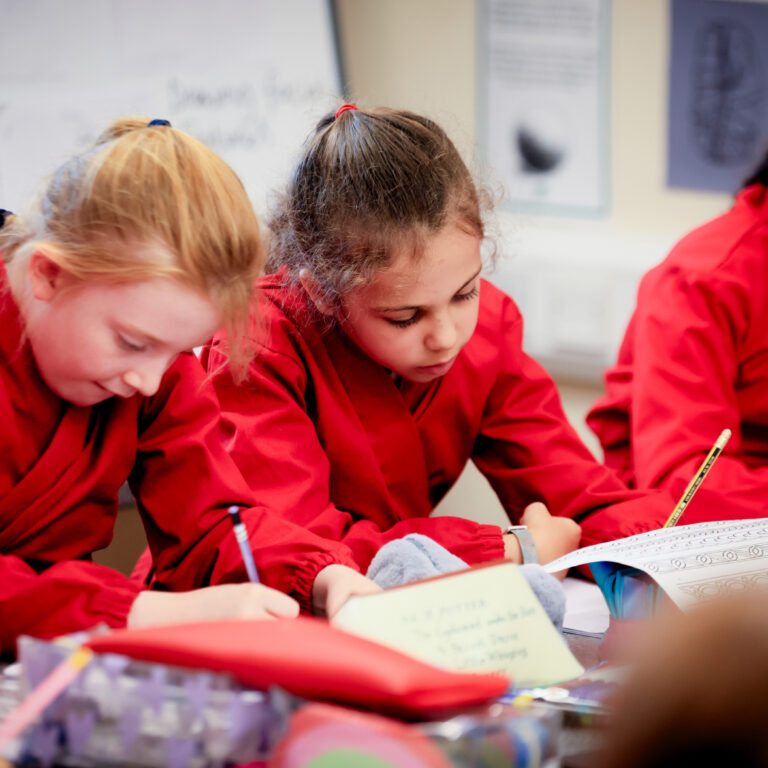
Department for Education figures for 2025/26 put the average class in state-funded primary schools in England at 26.1 pupils, and the average infant class at 25.9. A typical class at St Hilda’s is around 18. That gap of roughly eight children changes more than it sounds like it should:
- How often each child speaks, reads aloud or is asked a question in a lesson
- How quickly a misconception is spotted; in the lesson, rather than in the marking that evening
- How much of the week goes on managing a room rather than teaching it
- Whether staff outside your child’s own classroom know her by name
Curriculum breadth and specialist teaching
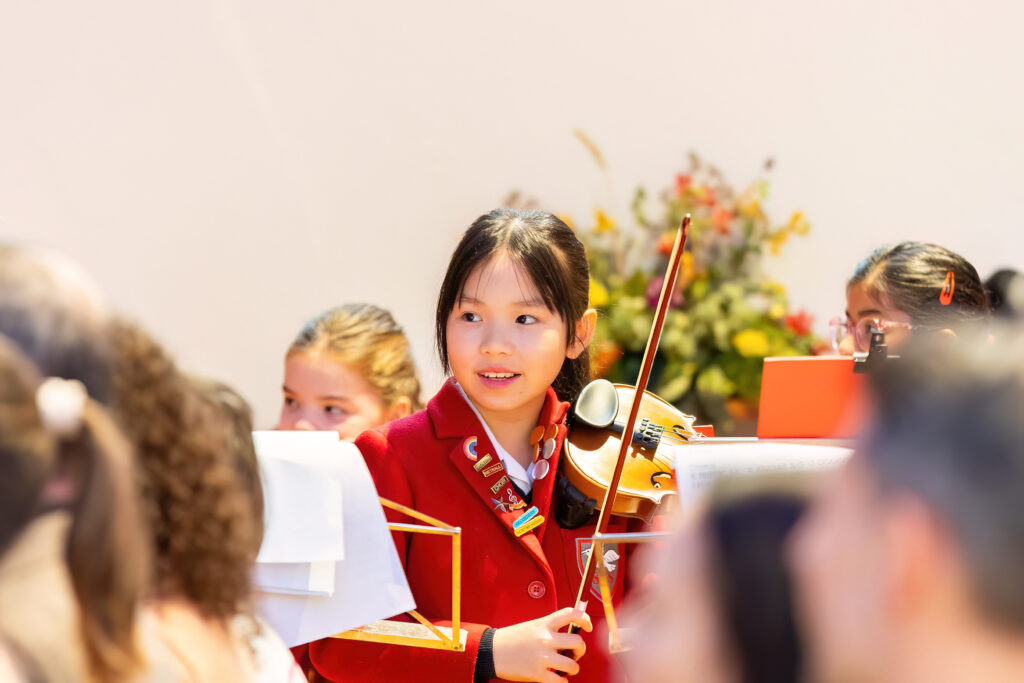
State primaries follow the National Curriculum; independent schools do not have to, which gives prep schools room to add subjects and start specialist teaching earlier. At St Hilda’s, French begins in Nursery, and specialist staff take music, PE, art, drama, languages and computing. Every child from Reception upwards spends a session each term in local woodland with Outdoor Explorers. Our prep curriculum page sets out the full subject list by year group.
Senior school transfer is the biggest structural difference
This is the difference most families underestimate. A state primary prepares children for transfer through the county admissions round. A prep school builds senior school entry (including entrance exams and scholarship applications) into the timetable itself.
- Entrance exam preparation from Form IV
- Setting and specialist teaching in Maths, English and Reasoning from Form V
- The Headmaster meets every family in the first term of Year 5 to discuss options
- An annual Secondary Transfer Fayre, with senior school staff on site to meet parents
- 70 scholarships and awards to Year 6 pupils over the past six years, across 23 senior schools
You can see the full six-year record on our destination schools page.
What it costs – and what is included
Fees are the obvious difference, and the comparison is more useful when you look at what sits inside them. Lunches, clubs, trips, instrument lessons, learning support and after-school care are charged very differently from one school to the next. At St Hilda’s, breakfast club runs from 7:30am at £3.50 a session and after school club until 6pm from £5.00 — the detail is on our wraparound care page, and current termly rates are published on the fees page. Funded early years hours and childcare vouchers apply in the nursery.
Where state primaries have the edge
An honest comparison has to include this. State primaries are free, they draw a cohort from your own streets, and friendships often continue into the same secondary school. Larger year groups can suit a child who wants a wider social pool. Hertfordshire has strong, well-led primaries, and for many families they are the right answer. The question is not which sector is better — it is which school fits your child.
Questions worth asking at every school you visit
- What is the average class size in the year group my child would be joining?
- Who teaches music, PE, languages and computing — the class teacher, or a specialist?
- How is a child who is ahead supported, and how is a child who is struggling supported?
- Where did last year’s leavers go, and how many got their first choice?
- What is included in the fee or the school day, and what is charged as an extra?
- What happens between 3:30pm and 6pm, and during the holidays?
Our admissions FAQs answer most of these for St Hilda’s before you visit.
See both, then decide
Visit your local state primary and visit a prep school in the same fortnight, and the comparison makes itself. Book a personal tour of St Hilda’s in Harpenden, come to an open event, or read through our admissions process to see what applying involves.